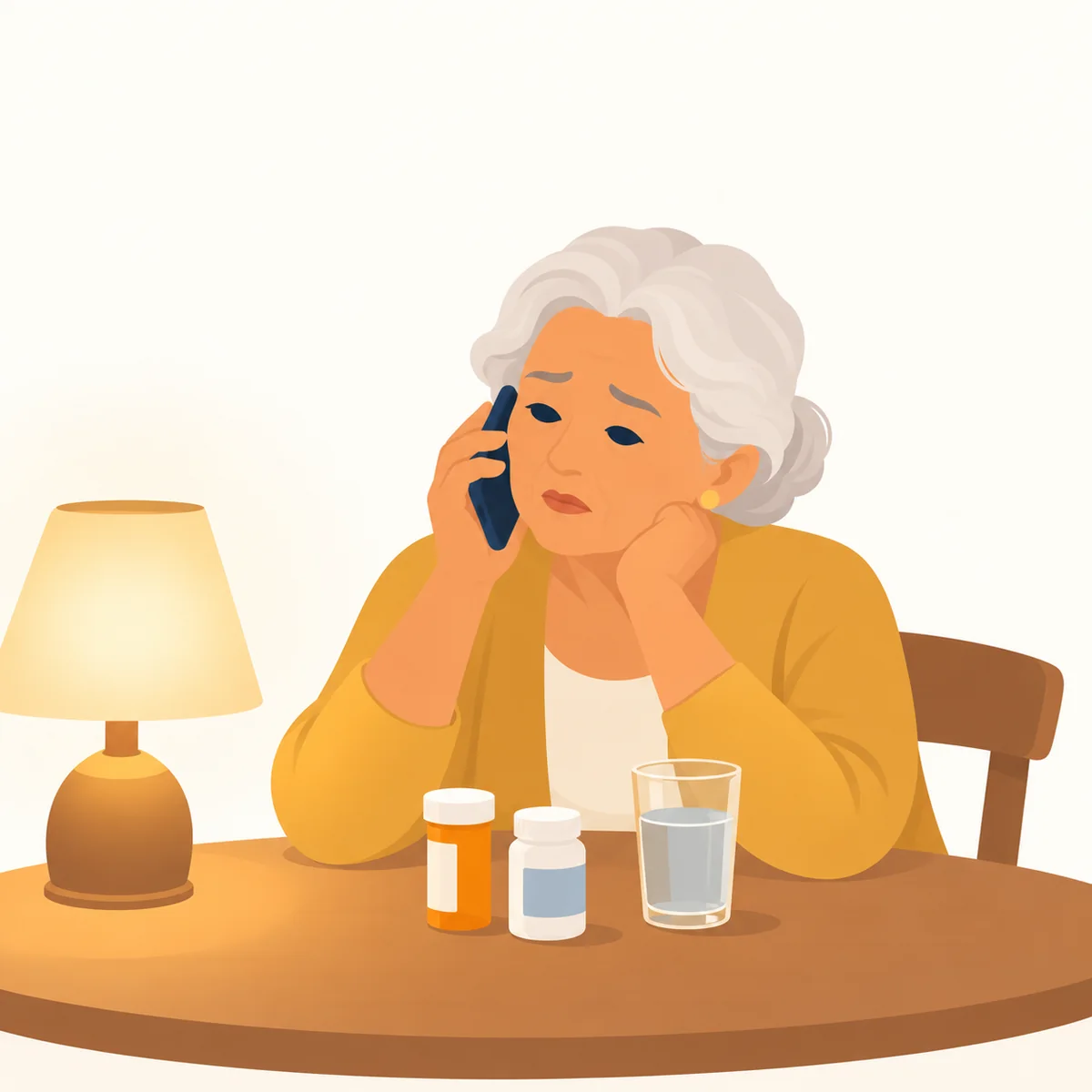
Daniel is 45. His mother, Lucía, is 78. She speaks Spanish at home. Daniel goes to her doctor visits when he can. He asks the questions. He explains the answers. He is her second pair of ears.
Last week he could not get off work. Lucía went alone. That night she called him. "The doctor gave me a new pill. Do I still take the old one?" Daniel did not know. He was not in the room. Lucía was not sure either. The visit had been fast, and the words had been in English.
Daniel called the clinic the next morning. He waited on hold. By the time he got an answer, his mother had already taken both pills.
Names and details are made up. This is not a real patient. But if you help care for a parent, a spouse, or a friend, you know this feeling.
Why this happens
Caring for someone means getting the news second-hand. You hear what your mom remembers, not what the doctor said. And people forget 40 to 80 percent of what the doctor said right away. Almost half of what they do remember, they remember wrong. (Kessels, 2003)
Add a second language, and it gets harder. Add a fast visit, and it gets harder still. None of this is your fault, and none of it is your mom's.
What you can do
- Ask to be on the phone. If you can't be in the room, ask the clinic to call you during the visit. Many will.
- Keep one medicine list. Take a photo of every bottle. Bring the list to every visit, and update it when something changes.
- Ask for an interpreter. Clinics that take Medicare or Medicaid must provide one at no cost (U.S. Department of Health and Human Services). You should not have to be the only translator.
- Ask for three things in writing. What changed. What to do next. When to come back.
- Ask if the visit can be recorded. Then the two of you can go over it together at home.
How Keeybod helps
After your parent asks the provider, Keeybod records the visit and gives them an easy-to-read summary on their phone, in English, Spanish, or Haitian Creole. If they choose, they can share it with you. It is free during the pilot.
By Dr. Jim Besong, family medicine doctor. This is general information, not medical advice. Ask your own doctor about your care.
About the author
Dr. Jim Besong is a family medicine doctor in Florida and a U.S. Marine veteran. He started Keeybod so patients can remember and understand what their doctor said.
Join the pilot list