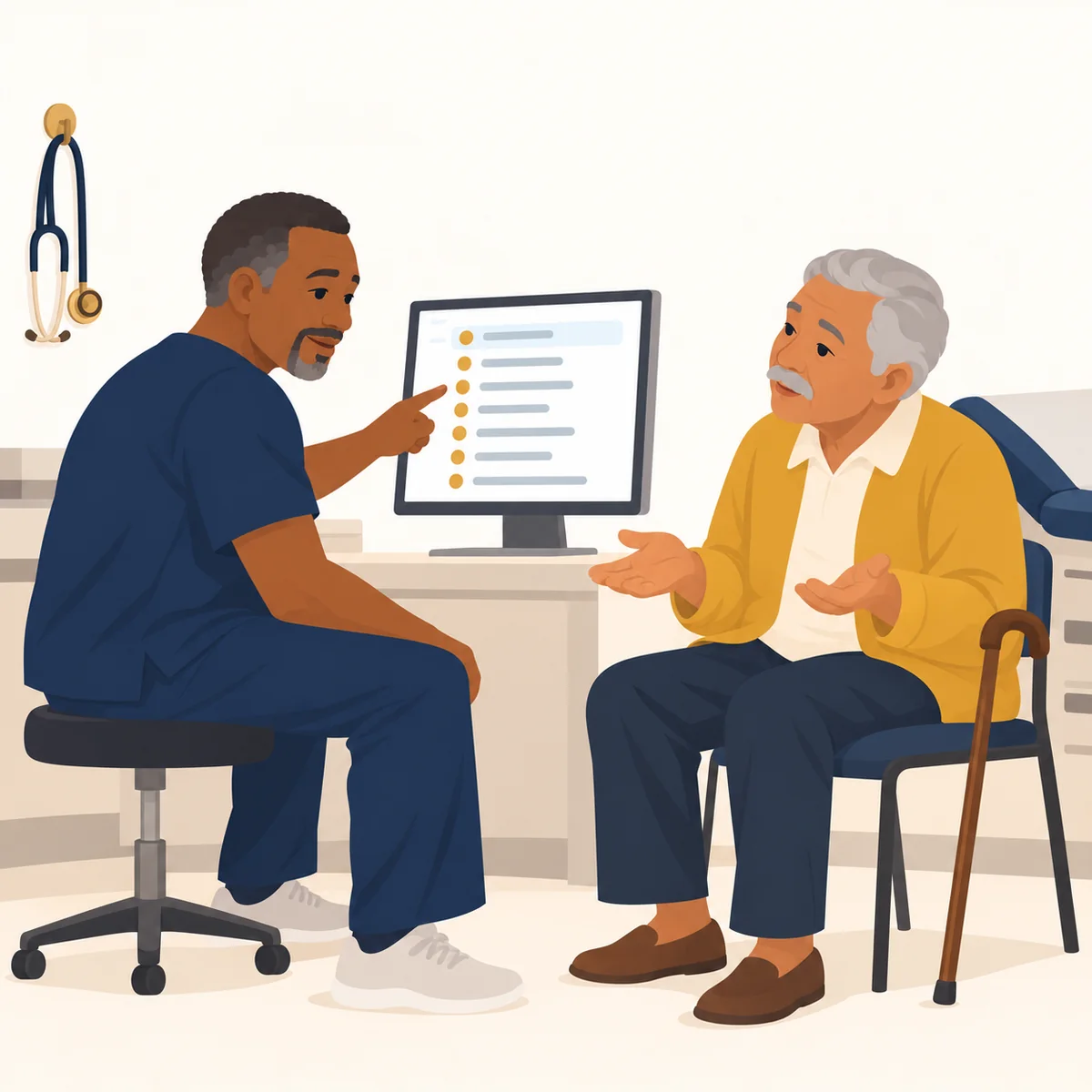
Dr. Marcus has twenty minutes with Mr. Rivera. Mr. Rivera is 74. He has heart failure, diabetes, and bad knees. He sees four doctors.
The visit starts with the list. "Are you still taking the water pill?" "I think so. The white one?" "Did the heart doctor change anything?" "He gave me something new. I don't have it with me." "Do you take the pain pill every day, or just when it hurts?" "Both?"
Ten minutes gone. Half the visit. The thing Mr. Rivera came in for, his dizzy spells, gets the other ten.
Names and details are made up. This is not a real clinic. But you have had this visit, probably today.
Why this happens
The list on your screen and the pills in the patient's kitchen are two different lists. Studies of hospital admissions found that 27 to 54 percent of patients had at least one error in their medicine history, and some studies put it as high as 67 percent. (Tam et al., CMAJ, 2005) Outpatient lists are no cleaner.
Every one of those errors is a question you have to ask, every visit, before you can do anything else.
What helps
- One list, owned by the patient. Ask them to keep one list on their phone or in their wallet, with every pill, dose, and reason. Ask to see it, not just hear it.
- Bottles once a year. A brown-bag visit catches doubles, old pills, and the one the other doctor added.
- Name the reason, not just the pill. "The water pill for your swelling" sticks. "Furosemide" does not.
- Say what changed, out loud and in writing. Started, stopped, changed. Three words patients can check at home.
- Say yes to a recording. The patient's own copy of "stop the white one" ends the "which one?" message before it starts.
How Keeybod helps
When a patient records a visit with Keeybod, the medicine list on their phone shows each pill with the dose and what it treats, and it shows what changed at the last visit. They can share it as a PDF with you or another doctor. There is nothing for you to install. We are looking for community clinics and veterans' programs to run the first pilot.
By Dr. Jim Besong, family medicine doctor. This is general information, not medical advice.
About the author
Dr. Jim Besong is a family medicine doctor in Florida and a U.S. Marine veteran. He started Keeybod so patients can remember and understand what their doctor said.
Join the pilot list